





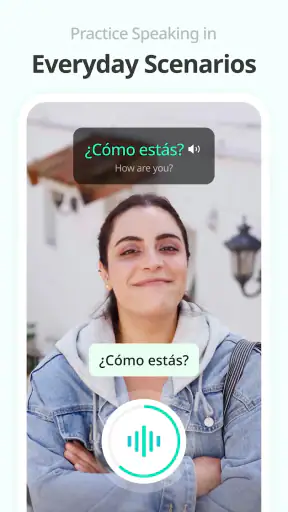
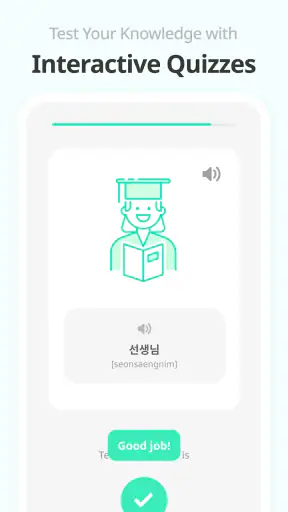
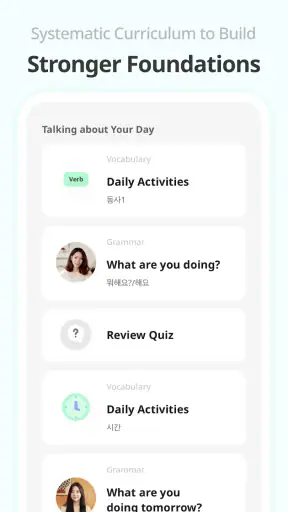

I approached Teuida: Learn Languages as a practical speaking tool rather than another app that asks me to memorize vocabulary silently. Its focus is simple: help beginners practice conversations by actually saying things out loud. That makes it especially interesting for anyone who understands a few words in a new language but freezes when it is time to use them.
Teuida inc developed this free education app for everyone, and it has grown into a widely used choice with more than a million installs. I found the basic idea easy to understand from the first session: instead of treating speaking as something saved for a classroom or a conversation partner, the app puts short language situations directly in front of me and encourages an immediate spoken response.
My overall impression is positive, but it depends heavily on what you want from a language app. If your priority is becoming less nervous about saying beginner phrases, this is a strong candidate. If you want a complete course covering advanced grammar, long-form writing, or unrestricted conversation with a tutor, you should look at a different type of tool. The useful question is not whether Teuida can replace every language-learning method. It is whether its speaking-first approach solves the particular problem you have today.
What I considered before recommending it
The real value is practice under light pressure
Many language apps are comfortable because they let me tap answers, match cards, or recognize a phrase without producing it myself. That can build familiarity, but recognition is not the same as speaking. Teuida is more valuable when I use it as a small rehearsal space. I have to move from seeing a prompt to forming a response, which exposes gaps that a multiple-choice exercise can hide.
That difference matters for beginners who already know basic expressions but rarely use them. Ordering something, introducing myself, asking a simple question, or responding politely can feel surprisingly difficult when there is no written answer to select. The app’s conversation-centered format gives those moments a clear frame, so I can concentrate on producing language instead of inventing an entire lesson plan.
I would judge the app using three questions. Does it make me speak repeatedly rather than merely study passively? Does each practice session feel manageable enough to repeat tomorrow? And does it help me notice the difference between knowing a phrase and being ready to say it? In my experience, Teuida performs best on the first two and offers useful progress on the third, especially at an early level.
It suits a narrow daily routine better than a long study session
The format feels most natural in short gaps: before leaving home, during a lunch break, or while waiting for an appointment. I would not choose it as the only activity for a long weekend study block. Speaking exercises demand attention, and repeating the same kind of beginner exchange for too long can become tiring. The app works better when I stop while the practice still feels focused.
A realistic routine would be to complete a short conversation exercise in the morning, then repeat the phrases later without looking at the screen. On the second attempt, I would try to answer more naturally instead of copying the rhythm from the first pass. That small delay turns the app from a set of prompts into a memory test, and it shows whether I can retrieve the language away from the immediate lesson.
One tip I found useful is to keep a separate note of phrases that felt slow to produce, not phrases that merely looked unfamiliar. Those are different problems. A phrase I do not recognize needs study; a phrase I recognize but cannot say smoothly needs repeated speaking. Teuida is particularly well suited to the second problem.
Beginner confidence is a better target than complete fluency
The app’s store positioning centers on conversation practice for beginners, and that is the right expectation. I would recommend it to someone starting a language, returning after a long break, or preparing for a trip where simple spoken exchanges matter. It can help make the first spoken attempts less intimidating because the situation is structured and the response is limited enough to feel achievable.
I would be careful with the word “fluency,” though. Regular practice can make familiar conversations easier, but speaking comfortably across unpredictable subjects requires much more exposure. Real people interrupt, change topics, use slang, speak at different speeds, and do not wait for a learner to assemble a perfect sentence. Teuida can prepare me for the first layer of interaction, but it cannot reproduce the full uncertainty of a live conversation.
This is also why I would not use it alone if my goal were academic writing, professional presentations, or detailed grammar analysis. The app’s strength is getting language out of my mouth. Those other goals need reading, writing, correction, and more extensive explanations alongside speaking practice.
Where the speaking-first approach wins
It turns passive knowledge into a physical habit
The most convincing advantage is behavioral. I can know that I should speak more, yet still spend every study session reading or tapping. Teuida removes some of that escape route. When an exercise expects a spoken response, I have to participate in a different way. That simple change makes the practice more honest.
I also like that speaking practice can reveal hesitation immediately. If I pause before a basic greeting, I may not need another explanation of the grammar; I may need to say the phrase several times until it becomes easier to retrieve. If I repeatedly confuse the word order, then I know what to review. This distinction helps me spend time on the actual weakness instead of assuming that more passive study will solve everything.
For a shy learner, the private setting is another practical benefit. Practicing alone does not replace speaking with another person, but it lowers the social cost of making mistakes. I can repeat an answer, slow down, and try again without worrying about holding up a class. That makes the first stage of speaking practice less emotionally demanding.
Scenario practice makes the lessons easier to remember
Conversation has a useful advantage over isolated vocabulary: it gives words a reason to exist. A greeting attached to an introduction, or a question attached to a familiar situation, is easier for me to recall than a disconnected list. The context does not guarantee that I will remember everything, but it gives the phrase a mental place to return to.
For example, imagine preparing for a first visit to a country where I barely speak the local language. I could spend the evening reviewing individual words, then discover that I cannot assemble a polite request at the counter. A speaking exercise built around that kind of exchange lets me rehearse the sequence: listen, understand the purpose, produce the response, and continue. Even if the real interaction is different, the mental transition is less unfamiliar.
My preferred workflow is to practice a conversation once for accuracy, once for smoother delivery, and once while looking away from the text whenever possible. The first pass tells me what the exercise expects. The second focuses on rhythm. The third tests whether I have actually learned the exchange rather than memorized its visual layout. This is a more effective use of the app than rushing through many lessons.
The interface is approachable for people who dislike traditional courses
Teuida feels less intimidating than a formal textbook because the immediate task is concrete. I do not need to decide which grammar chapter to open before I begin. That reduces the setup friction that often causes me to postpone studying. The app’s education category also makes sense here: it is not just a phrasebook, but it is not pretending to be a full classroom either.
Its average rating is 4.7 from roughly forty-five thousand ratings, with about two thousand four hundred written reviews. Those figures do not prove that it will suit every learner, but they do suggest that the speaking-centered format has connected with a substantial audience. I would still treat the rating as a starting signal rather than a substitute for matching the app to my own learning style.
The current version is 1.22.11, and the app runs on Android 7.0 or later. That makes it accessible on many older Android devices, although the experience will still depend on the phone’s microphone, speakers, and general condition. For speaking practice, clear audio matters more than it does in a simple flashcard app, so I would test the first exercise in the place where I expect to study most often.
Free access lowers the risk of trying the method
Teuida is free to install, which makes experimenting with its approach straightforward. I can find out whether I enjoy speaking to an app before committing to a paid course or tutor. That is important because some learners love interactive prompts while others find them awkward and prefer quiet reading or structured grammar lessons.
There are in-app purchases ranging from $4.99 to $89.99 per item. I would not treat the free entry point as proof that every useful part of the learning experience will remain free. Before paying, I would check exactly what a purchase unlocks and whether it matches my routine. A large course purchase only makes sense if I am genuinely using the speaking practice consistently; otherwise, the free trial experience may already answer the main question.
A sensible approach is to use the available access long enough to establish a habit, then decide whether additional material would solve a clear problem. Paying because I feel guilty about an unfinished course is not a good reason. Paying because I have identified a specific need for more practice is much more defensible.
Where another kind of language app may fit better
Vocabulary-heavy learners may prefer a different starting point
If I am beginning from zero and cannot recognize even the core words in a lesson, I may need a more systematic vocabulary foundation first. Teuida can provide context, but conversation practice becomes frustrating when every prompt contains several unknown elements. A flashcard-focused tool or a beginner textbook may be better for building a base, after which Teuida can help turn that knowledge into speech.
The same applies to learners who enjoy seeing a clear grammar progression. Speaking practice can show me that a sentence is difficult without always satisfying my curiosity about every rule behind it. Someone who wants detailed explanations, written drills, and explicit conjugation tables may feel more comfortable with a conventional course. I would combine the two rather than forcing one app to serve incompatible purposes.
People seeking open-ended conversation need realistic expectations
Structured prompts are helpful precisely because they limit the task. The trade-off is that they do not prepare me for every possible reply. If I am looking for spontaneous conversation with a human partner, a tutor, or a language exchange community, Teuida is a preparation tool rather than a replacement. It can help me arrive with a few practiced phrases, but it cannot provide the unpredictability and personal feedback of another speaker.
This distinction is important for intermediate learners. Once I can handle basic exchanges comfortably, repeating beginner situations may offer less value than listening to longer content, writing messages, or speaking with people who respond naturally. I would keep Teuida for maintenance or pronunciation confidence only if it still challenged me. Otherwise, the opportunity cost becomes noticeable.
Travelers should use it before the trip, not only during it
Someone downloading the app on the way to the airport may get some value, but the best results come from rehearsal before the urgent moment arrives. Speaking under travel stress is difficult even in a familiar language. Practicing a few likely interactions in advance gives me time to notice which words I consistently avoid or mispronounce.
I would not rely on the app as an emergency translation service. A traveler may still need an offline phrase reference, translation tool, or human assistance for unexpected situations. Teuida’s role is different: it helps me practice producing useful language so I am less dependent on a screen for every basic exchange.
The cost of changing from passive study
The first obstacle is discomfort, not complexity
Switching from tapping answers to speaking aloud can feel strangely demanding. I may understand a phrase immediately while reading it, then stumble when asked to produce it. That is not necessarily a flaw in the lesson; it is information about the gap between recognition and recall. The app makes that gap visible, which can be uncomfortable but useful.
I recommend starting somewhere private and accepting imperfect delivery. Trying to sound native from the first session creates unnecessary pressure. My better goal is to answer without freezing, then improve clarity and speed gradually. Recording myself separately after practice can also reveal whether I am speaking too quietly or relying on the written prompt, although I would not turn every session into a performance review.
A small routine prevents the app from becoming another abandoned download
The cost of switching is mainly consistency. A speaking app cannot help if I open it only when I feel motivated. I would attach practice to an existing routine, such as coffee in the morning or the quiet period before bed. Keeping sessions short makes it easier to return, and repeating one conversation intelligently is often more useful than racing through several.
One advanced but simple technique is to create a three-stage loop. First, I complete the exercise with all available support. Next, I repeat it while trying to answer before the prompt fully reveals the wording. Finally, I summarize the situation in my own words, even if my version is simpler. This last step prevents me from becoming dependent on the exact script and shows whether the lesson has transferred into usable language.
I would also rotate between comfortable and difficult material. Only practicing easy phrases feels rewarding but may hide weaknesses. Only practicing difficult exchanges can make the app feel punishing. Alternating them gives me confidence while preserving a reason to improve.
Paid access should follow evidence of regular use
The presence of purchases from $4.99 up to $89.99 means the financial decision deserves attention. I would first ask whether the app’s core interaction fits my personality and whether I am actually speaking several times a week. If the answer is no, buying more content will not fix the habit. If the answer is yes, then a purchase may be reasonable when it extends a routine I already value.
I would also compare the purchase with the alternative I would genuinely use, not an imaginary perfect study plan. A paid speaking course may be worthwhile if it replaces hours of unstructured browsing. A free vocabulary resource may be better if I am still building basic word knowledge. A tutor may be the better expense if I need correction, accountability, or conversation that changes direction naturally.
My recommendation for the right learner
Who should install it
I recommend Teuida to beginners who want to speak sooner, learners who understand more than they can say, and travelers preparing for simple real-world interactions. It is also a good fit for people who dislike studying from long explanations and prefer a guided prompt that gets them acting immediately.
I would especially suggest it to someone who says, “I know the phrase when I see it, but I cannot produce it.” That sentence describes the exact gap this app is designed to address. Used repeatedly and aloud, it can turn familiar language into something more available under pressure.
Who should choose another primary tool
I would not make it my main recommendation for advanced learners, students focused on formal writing, or anyone who wants detailed teacher feedback. It is also not ideal for a learner who strongly dislikes speaking to a device or who needs a broad curriculum that gives equal weight to reading, writing, grammar, listening, and conversation.
Those users may still benefit from adding Teuida to a wider plan, but they should not expect it to carry the entire burden. Its value is clearest when it fills the speaking-practice gap left by more passive resources.
My final view
Teuida earns its place as a focused beginner speaking app because it asks me to do the part many language tools let me avoid: say the language myself. The free starting point makes it easy to test, the Everyone rating keeps it broadly approachable, and its strong 4.7 average shows that many users respond well to the format. I like it most as a short, repeatable rehearsal tool rather than a complete language school.
My recommendation is to install it, practice a few conversations aloud, and judge the experience by how often you return and how much easier familiar responses become. Do not buy extra content simply because it is available. First prove that the speaking routine fits your life. If it does, this is a practical bridge between studying a language and actually opening your mouth to use it. If your needs have already moved beyond guided beginner exchanges, keep it as a warm-up or choose a resource built for deeper, more spontaneous communication.


